Enterprise project management breaks down not from lack of effort, but from lack of the right system to link strategy, execution, and visibility.
Different teams use different tools. Leadership lacks real-time insight. Resources are stretched across competing priorities without a clear view of capacity.
The result is predictable: missed deadlines, misaligned initiatives, and slow decision-making.
This is where enterprise project management features make the difference. They transform isolated execution into a connected system that drives strategic outcomes.
What Are Enterprise Project Management Features? (And Why Basic Tools Fall Short)
Enterprise project management (EPM) features go far beyond task tracking.
Traditional tools help teams manage what needs to be done.
Enterprise platforms help organizations understand why it matters and whether it should be done at all.
At scale, organizations need to answer:
- Are we investing in the right initiatives?
- Do we have the capacity to deliver them?
- Can leadership see what's happening in real time?
Basic tools struggle here because they operate at the team level, lack in portfolio visibility or don't connect strategy to execution.
Enterprise-grade platforms solve this by providing:
- Structured hierarchies
- Portfolio-level visibility
- Centralized reporting
- Cross-functional alignment
What Are the Must-Have Features in Enterprise Project Management Software
The best enterprise platforms share a set of core capabilities that enable scale, clarity, and control.
AI & Automation for Scalable Decision-Making
Enterprise environments generate constant complexity - dependencies, delays, shifting priorities.
Automation and AI help organizations:
- Detect risks early
- Automate repetitive workflows
- Identify bottlenecks before they escalate
Structured Hierarchy (Strategy → Portfolio → Project → Task)
Without structure, alignment collapses.
Enterprise project management platforms must connect strategic goals, portfolios, projects, and day-to-day work items.
This hierarchy ensures every piece of work is tied to measurable business outcomes, making it easier for organizations to track progress, identify gaps, and ensure efforts contribute to overarching goals.
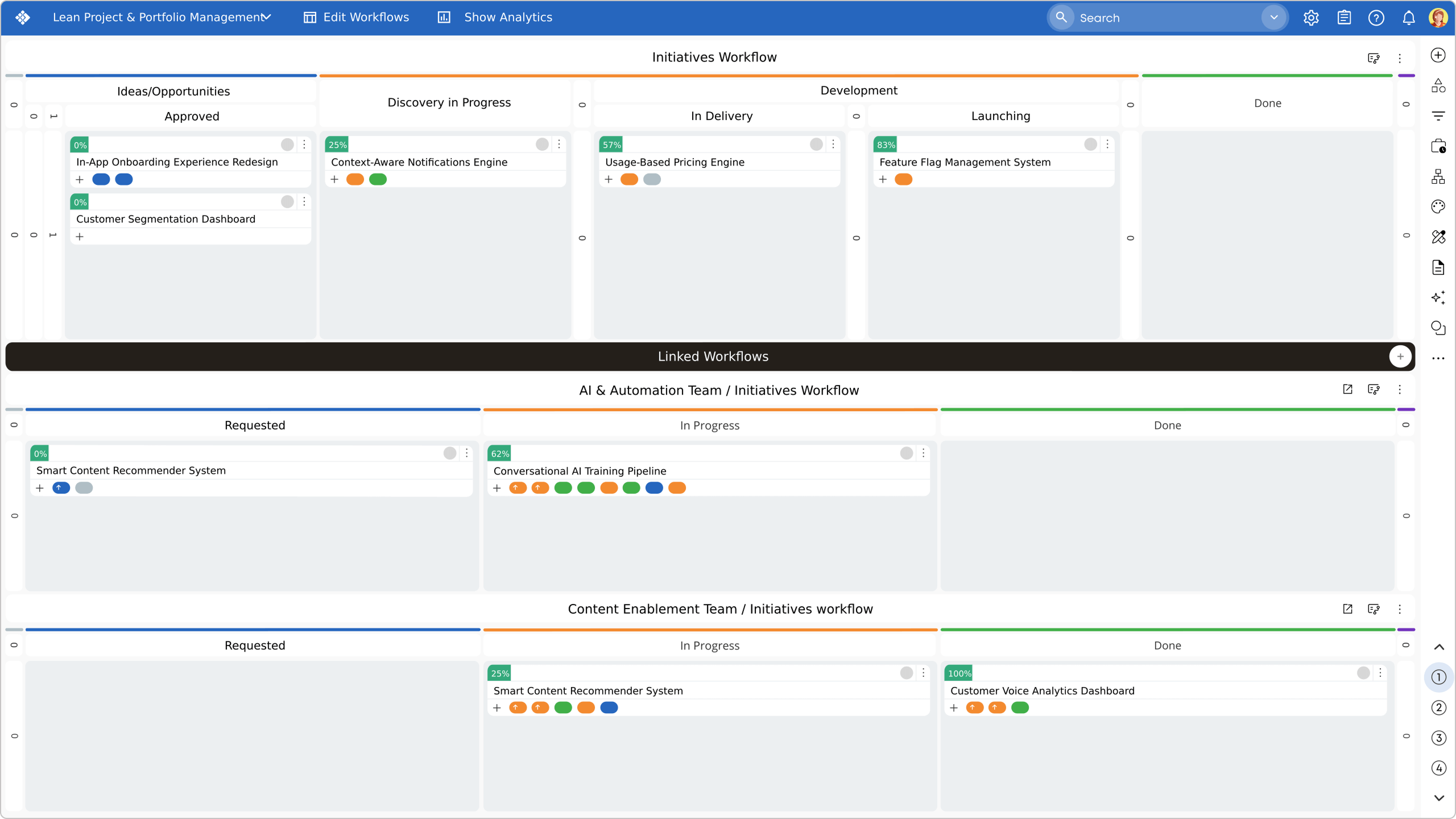 Visualizing project portfolio and work coordination boards in Businessmap
Portfolio & Project Reporting (Executive Visibility)
At the enterprise level, visibility is everything. Leaders need real-time clarity.
Top platforms provide:
- Executive dashboards
- KPI and OKR rollups
- Financial and delivery insights
This aligns directly with how project leaders evaluate tools in practice, as they prioritize systems that consolidate KPIs, risks, and performance into a single view, making performance tracking and decision-making more efficient and accurate.
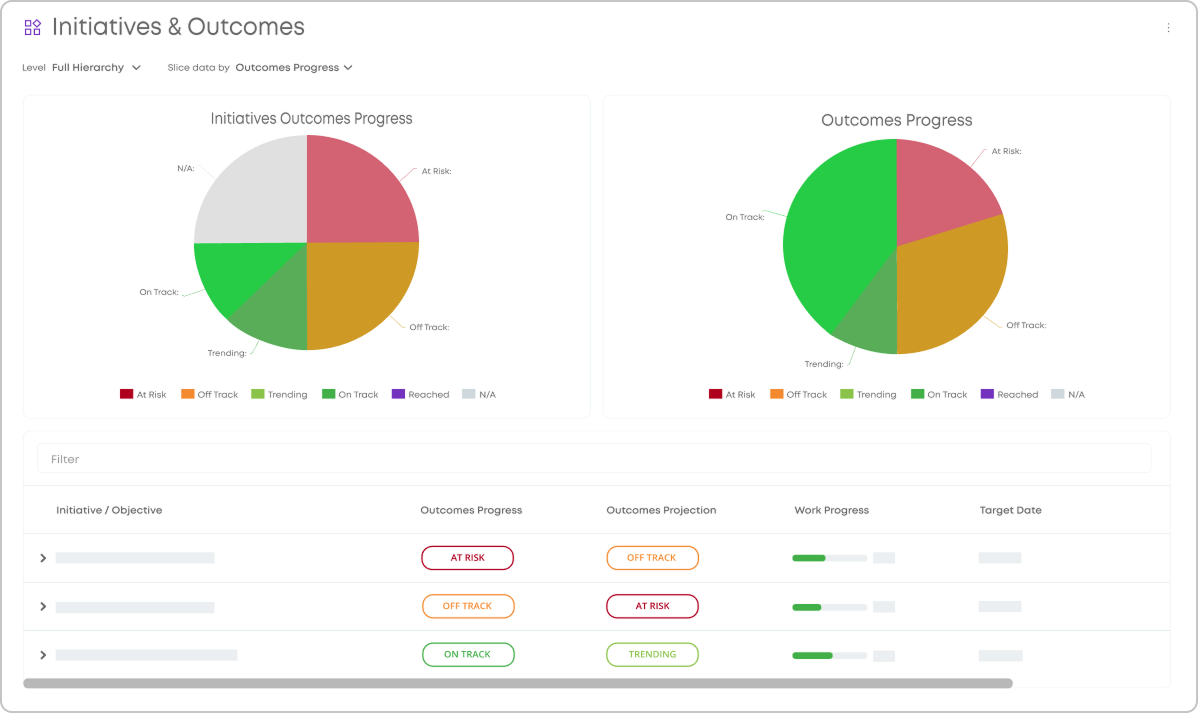 A real-time view into goals and KPIs progress status in Businessmap
Collaboration at Scale (Visual Workspaces & Whiteboards)
Enterprise collaboration isn't about messaging; it's about shared understanding.
Advanced platforms offer:
- Visual planning environments
- Cross-team coordination
- Project dependency mapping
This is essential for cross-functional alignment, where multiple departments operate within the same system.
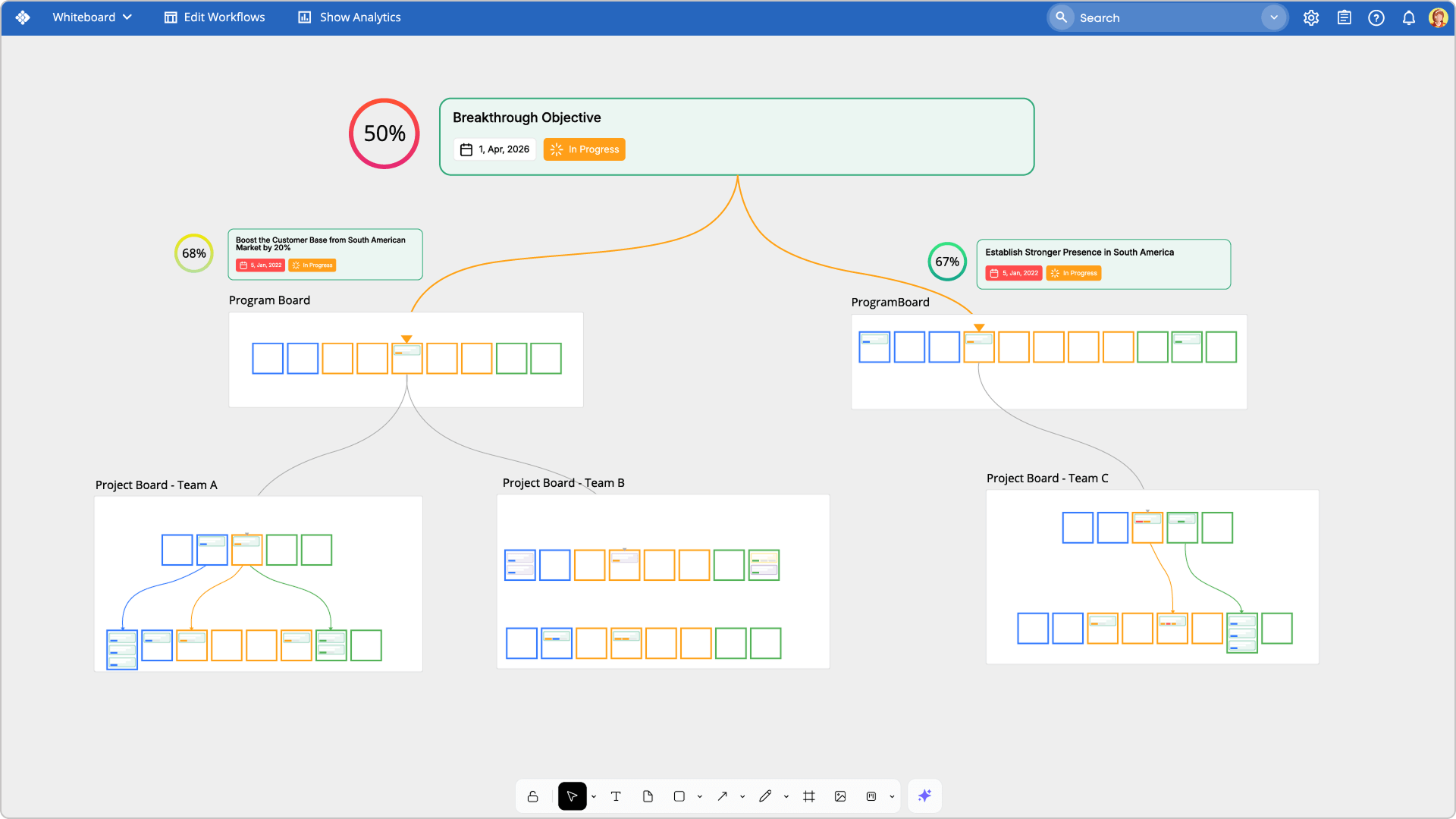 Visualizing the link between strategic goals, programs and team projects using a whiteboard in Businessmap
Advanced Enterprise Features that Separate Good Tools from Great Ones
Core features enable execution. Advanced features enable optimization and control.
Resource Management & Capacity Planning
One of the biggest enterprise challenges is resource overload. Advanced tools allow you to:
- Allocate resources across multiple projects.
- Forecast capacity vs demand
- Prevent bottlenecks before they happen.
This turns resource management from reactive to strategic, giving organizations advance visibility into resource allocation, minimizing overload, and supporting sustainable growth.
Scenario Planning ("What-If" Analysis)
Enterprise decisions carry risk. Scenario planning enables leaders to:
- Simulate different outcomes
- Evaluate trade-offs
- Make informed decisions before committing resources.
Workflow Automation & Custom Workflows
Consistency drives predictability. Custom workflows help organizations:
- Standardize processes
- Enforce governance
- Scale best practices
As experienced practitioners often point out, tools don't replace structure - they amplify it.
Integration Capabilities: The Backbone of Enterprise Project Management
Enterprise tools must operate within a broader ecosystem.
Strong platforms provide:
- API-first architecture
- Real-time data synchronization
- Unified reporting
Without integration, organizations lose visibility across teams and systems, leading to information gaps and slower response times.
Enterprise-Grade Security & Scalability Features
At scale, governance is critical.
Custom Permissions & Role-Based Access
Enterprise tools must support:
- Granular permissions
- Role-based visibility
- Secure collaboration
Single Sign-On (SSO) & Identity Management
SSO ensures:
- Secure access
- Simplified authentication
- Centralized user control
Audit Trails & Compliance
For regulated industries, traceability is essential.
Platforms must provide:
- Full audit logs
- Change tracking
- Compliance-ready reporting
Multi-Tenancy & Scalability
Large organizations need platforms that scale across:
- Departments
- Regions
- Business units
This ensures large organizations can maintain high performance and reliability, even as the number of users and projects grows.
How Businessmap Compares to Other Enterprise Project Management Tools
Many popular pm tools like ClickUp, Monday.com, Wrike, Smartsheet, and Asana offer strong project management capabilities. But most were built for team-level execution, not enterprise orchestration.
As organizations grow, the gap becomes clear.
Team Tools vs. Enterprise Platforms: Where the Gap Appears
Who Actually Uses These Tools and What That Reveals About Enterprise Readiness
When you strip away feature lists and marketing claims, one signal tells you everything you need to know about a platform's true positioning: Who is actually using it at scale?
Based on Capterra user distribution data across company sizes, a clear pattern emerges:
Most "Popular" Tools Are Still SMB-Centric
Across ClickUp, Monday.com, Asana, Wrike, and Smartsheet, the majority of users fall into the small business segment.
- ClickUp & Monday.com: Overwhelmingly dominated by small teams
- Asana: Strong SMB adoption, moderate mid-market presence
- Wrike & Smartsheet: Slightly more balanced but still skewed toward smaller organizations
While these tools have added enterprise features over time, their adoption patterns reveal they are still primarily optimized for team-level coordination.
Businessmap Stands Out Where It Matters: Enterprise Usage
In contrast, Businessmap shows a significantly higher share of enterprise users. (Source: Businessmap on Capterra)
This is a direct reflection of the platform's design.
Organizations operating at enterprise scale don't choose tools based solely on ease of use. They choose based on whether the system can:
- Handle cross-functional complexity
- Provide real-time portfolio visibility
- Support governance and structured workflows
- Connect strategy directly to execution
The adoption pattern confirms Businessmap is not just used by enterprises - it is built for them, to address their unique complexities, delivering features that boost organizational effectiveness.
Start Transforming Your Enterprise Project Management Approach
Enterprise project management is no longer about control - it's about clarity.
When your systems provide visibility, alignment, and predictability, execution becomes a competitive advantage.
See how Businessmap supports organizations operating at scale delivering portfolio visibility, resource planning, and execution in one place.

Iva Krasteva
Content Strategist | Agile Practitioner | Kanban Certified
Iva is a Kanban-certified Agile expert with hands-on experience in SEO, content creation, and Lean practices. She has published dozens of articles on Lean, Agile, and Kanban practical applications. Iva actively promotes collaborative, flexible work environments and regularly shares process optimization insights through writing.