Enterprise Project Management (EPM) and Project Portfolio Management (PPM) are both crucial for managing large-scale initiatives, but they serve different purposes. EPM focuses on executing projects effectively, while PPM is about selecting the right projects to drive strategic success. Understanding the key differences, metrics tracked, and use cases will help you choose the right solution to meet your organization's needs.
Key Differences Between EPM and PPM: Scope, Goals
EPM vs. PPM Scope
PPM focuses on project selection and optimization, while EPM handles the execution and tracking of those projects once they are prioritized.
- EPM is designed to manage the execution of projects within an organization, ensuring that resources are allocated effectively, risks are managed, and timelines are met. It focuses on the successful execution of multiple projects across departments.
- PPM, however, concerns the strategic oversight of a portfolio of projects. It ensures that the right projects are selected, prioritized, and aligned with organizational strategy.
EPM vs. PPM Goals
- EPM helps project managers and teams deliver projects on time, within scope, and within budget. It ensures that project execution aligns with company objectives, providing the operational control necessary for successful project delivery.
- PPM, on the other hand, empowers executives and decision-makers to evaluate, prioritize, and select projects based on their strategic importance, ROI, and risk. It's about ensuring that the right projects are selected to support long-term organizational goals.
How EPM and PPM Support Organizational Strategy and Alignment Differently
Both EPM and PPM play a role in supporting organizational strategy, but they do so in different ways:
EPM aligns project execution with business strategy. By focusing on ensuring that projects meet deadlines, stay within budget, and produce expected results, EPM provides a bridge between strategic intent and operational success.
PPM ensures that the project portfolio aligns with long-term business strategy by evaluating, prioritizing, and selecting projects with the highest potential value. PPM gives organizations the flexibility to optimize their portfolios by considering resource availability and strategic goals.
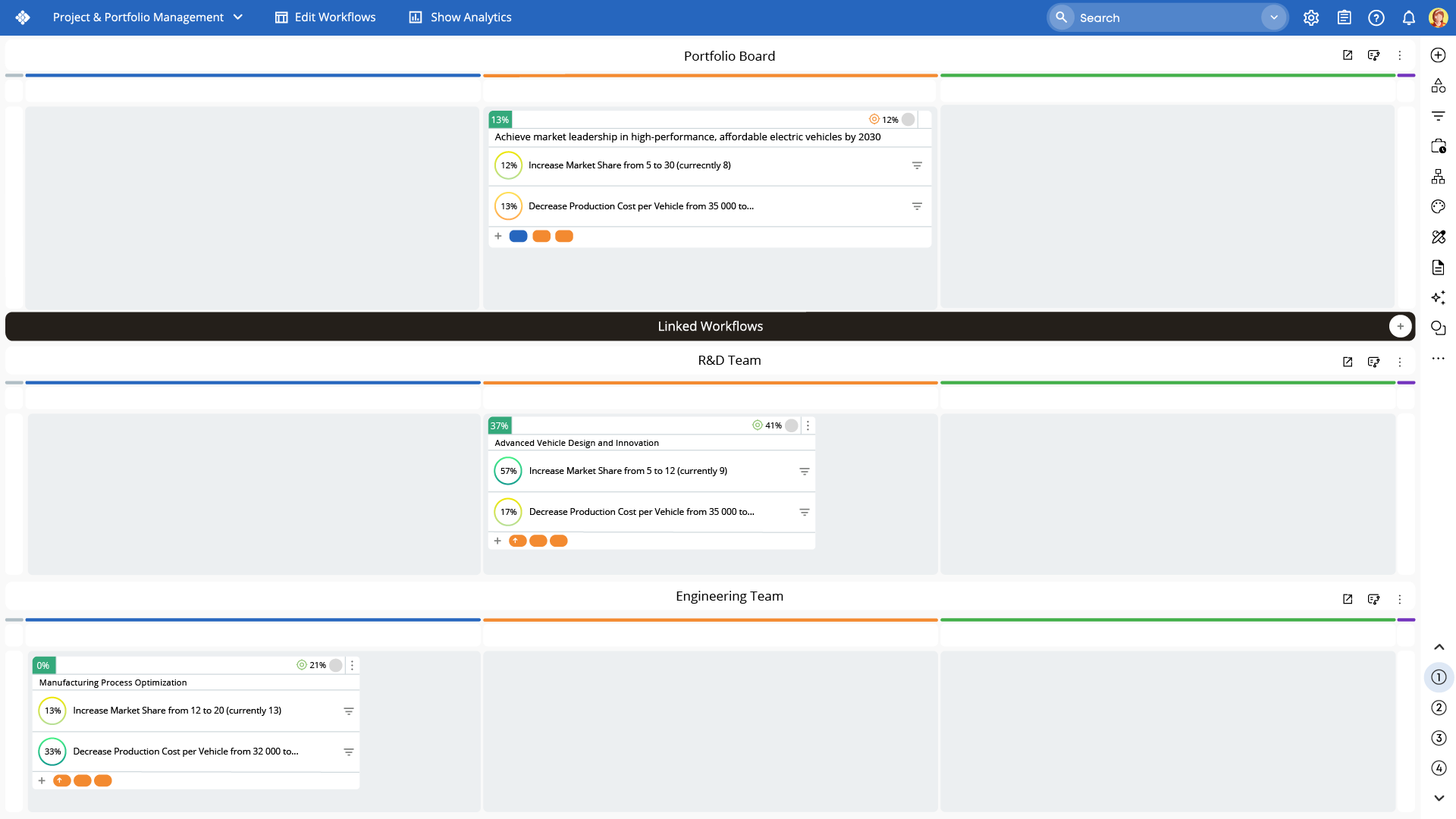 Visualizing of the distribution and connection of work across delivery boards in Businessmap
Metrics: What Data Do EPM vs. PPM Track?
EPM Metrics: Project Performance
- Project Schedule: Monitoring deadlines and milestones.
- Budget Compliance: Ensuring that project costs remain within the financial plan.
- Resource Utilization: Tracking the allocation and effectiveness of project resources.
- Risk Management: Identifying and mitigating risks throughout the project lifecycle.
EPM tracks project-level metrics, helping teams to ensure successful execution.
PPM Metrics: Portfolio Value and Risk
- Portfolio ROI: Measuring the return on investment across all projects.
- Risk Assessment: Evaluating the risk associated with each project and the overall portfolio.
- Strategic Alignment: Ensuring that each project aligns with organizational strategy.
- Resource Allocation: Optimizing resources across the entire portfolio.
PPM focuses on portfolio-level metrics that guide decision-making for project selection and prioritization.
Use Cases: When to Use EPM and PPM
EPM Use Cases
- Cross-Departmental Project Management: Large organizations use EPM to manage multiple projects across different departments, ensuring efficient project execution and resource allocation.
- Project Delivery for Strategic Goals: EPM ensures that all projects support organizational objectives and are delivered on time and within budget.
PPM Use Cases
- Portfolio Optimization: Executives use PPM to select and prioritize projects based on strategic importance, ensuring that the portfolio delivers the greatest value.
- Resource Management across Projects: PPM helps organizations balance resource allocation across a range of projects, ensuring that the right projects are prioritized based on available capacity.
What Capabilities Should EPM and PPM Solutions Provide?
EPM Capabilities
- Governance and Compliance: Ensuring that all projects follow standardized processes and governance rules.
- Resource Planning: Efficiently allocating resources across multiple projects.
- Real-Time Dashboards: Providing up-to-date insights into project status, risks, and performance.
PPM Capabilities
- Portfolio Governance: Oversight of the entire project portfolio to ensure alignment with business strategy.
- Scenario Planning: Evaluating potential projects and their impact on the portfolio.
- Executive Dashboards: High-level views of portfolio performance and resource allocation.
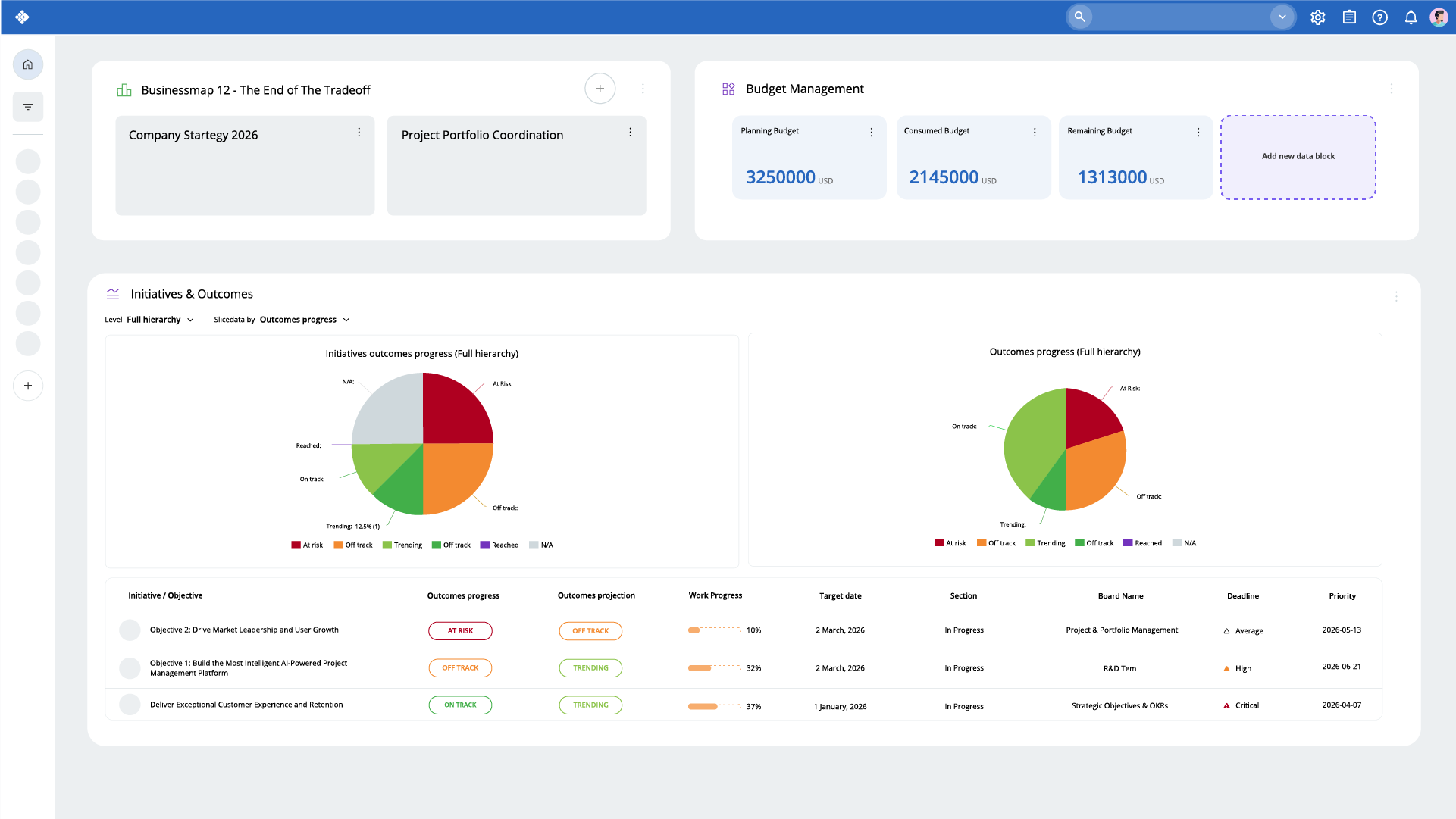 Visualizing relevant data using executive dashboards in Businessmap
Businessmap, for example, offers a solution including both EPM features and PPM capabilities, providing strong project and portfolio visibility, real-time insights, and ppm planning, making it an ideal tool for aligning projects with strategic goals. Choose a tool that best aligns with your organization's maturity and strategic needs.
Is Your Company Ready for EPM or PPM? Key Questions to Ask
Before adopting an EPM or PPM solution, ask these internal questions:
For EPM Readiness:
- Do we have cross-departmental teams that need alignment on project execution?
- Are we struggling to track project performance and resource allocation in real-time?
- Do we need a system to manage and standardize processes across projects?
For PPM Readiness:
- Do we need to evaluate and prioritize projects based on strategic goals?
- Are we looking for a solution to optimize our project portfolio and resource allocation?
- Do we need to ensure that projects align with long-term organizational strategy?
| Aspect | Enterprise Project Management (EPM) | PPM (Project Portfolio Management) |
|---|---|---|
| Scope | Focuses on the execution of projects within an organization. | Focuses on selecting and prioritizing a portfolio of projects across the enterprise. |
| Primary Goal | Ensure projects are delivered efficiently, within budget, and aligned with strategic goals. | Ensure that the right projects are selected to optimize portfolio value and align with strategy. |
| Metrics Tracked | Project performance, schedule, budget compliance, resource utilization, and risks. | Portfolio ROI, strategic alignment, risk assessment, and resource allocation. |
| Decision-Makers | Enterprise project managers (as part of EPMO). | Executives and senior leadership. |
| Visibility | Provides real-time project-level visibility into execution. | Provides portfolio-wide visibility to track and prioritize projects. |
| Tools | Businessmap, Microsoft Project, Smartsheet | Businessmap, Planview, Microsoft Project |
Start Transforming Your Project Management Processes by Implementing EPM and PPM
Ready to align your projects with your strategy? Learn how Businessmap can help you manage projects effectively and optimize your portfolio with real-time visibility.
See how Businessmap's integrated approach simplifies portfolio tracking, resource optimization, and real-time project monitoring.

Iva Krasteva
Content Strategist | Agile Practitioner | Kanban Certified
Iva is a Kanban-certified Agile expert with hands-on experience in SEO, content creation, and Lean practices. She has published dozens of articles on Lean, Agile, and Kanban practical applications. Iva actively promotes collaborative, flexible work environments and regularly shares process optimization insights through writing.