Enterprise Kanban boards often collapse at 500 users, leading to vanishing dependencies, siloed data, and outdated executive dashboards that drain transformation budgets. Scaling from teams to portfolios demands tools excelling in performance, security, and strategy integration, far beyond small-team setups.
What Makes Kanban Software "Enterprise-Grade"?
Enterprise-grade Kanban software is built for unlimited hierarchies, real-time flow analytics, and strategy-to-execution links that handle thousands of users without custom code or admin armies. Most tools falter here, offering flat boards that crumble at scale or forcing pricey add-ons for portfolio views.
True enterprise Kanban software for Kanban boards delivers visual multi-layer workspaces, AI-driven insights, and hybrid workflow support out of the box.
How to Evaluate Reliable Kanban Software for Enterprise Use
Focus on these non-negotiables to spot reliable software for Kanban at scale:
- Visual Hierarchy & Dependencies: Unlimited levels from OKRs to tasks, with cross-team mapping, and no plugins needed.
- Flow Metrics: Cycle time, throughput, WIP limits, and bottleneck detection for data-backed decisions.
- Adoption Speed: Weeks-to-value via intuitive UX, not months of consultants.
- TCO: Flat pricing including analytics, automations, and AI insights.
When Kanban Stops Scaling: The First Constraints Enterprises Hit
Enterprises first experience boards overload, visibility fractures, and strategic OKRs drift from team reality. Performance issues due to flat structures that can't aggregate thousands of cards, dependencies hide in silos, inflating cycle times. The stakes? Misaligned portfolios affect delivery predictability, eroding C-level trust and wasting PMO budgets on recovery.
In the pre-Businessmap era, CTT Portugal struggled with delivery times dragging on for 120 days. By adopting Businessmap's hybrid structure, they reduced cycles to 63 days and boosted flow efficiency by 55%.
CTT Portugal Logistics Case Study
Read the case studyWithout multi-layer boards or flow analytics, Kanban devolves into a series of task lists. Reliable software for Kanban at scale anticipates this, embedding portfolio workspaces that roll up risks automatically.
Can Kanban Tools Reliably Support 1,000+ Users and Thousands of Boards?
Yes. Businessmap powers 1,000+ users across unlimited boards with sub-second loads, AI canvases for portfolio breakdowns, and no performance dips. Jira demands add-ons and admins that drive up costs, while Planview may require more extensive configuration.
Enterprise Kanban Scalability Compared: Businessmap vs. Jira vs. Planview
Not all enterprise Kanban software scales equally. Businessmap leads with native Lean agility; Jira offers ecosystem hacks; Planview enforces structure at configuration cost.
Can Enterprise Kanban Software Connect Strategic Planning with Team Execution Without Custom Development?
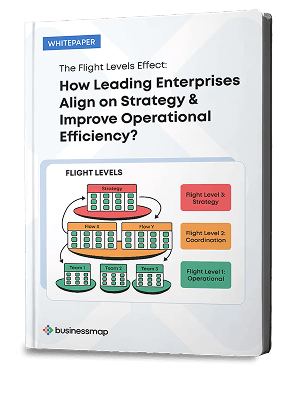
Yes. Businessmap links OKRs to work items via multi-layer boards, auto-rollups, and Flight Levels visuals, no dev required.
AI canvases map initiatives to dependencies in real-time, surfacing risks from team sprints to C-suite goals. This native alignment turns enterprise Kanban software into a strategy engine.
Discover how Businessmap exemplifies this: Deployed in energy giants, it reduced planning cycles by delivering native Lean PPM without the bloat.
Fortune 500 Energy Case Study (Download Whitepaper)
Which Tools Provide Multi-Level Board Hierarchies, Cross-Team Dependencies, and Portfolio Analytics?
Businessmap dominates, offering unlimited hierarchies (strategy > portfolio > team), interactive dependencies, and AI-powered analytics like timeline Gantt views and bottleneck heatmaps.
- Hierarchies: Nest OKRs into programs, roll up progress instantly.
- Dependencies: Visual cross-team links.
- Analytics: Predictability charts, executive dashboards.
- Hybrid support for Agile, SAFe, or custom flows.
What Enterprise-Grade Security Features (SSO, Audit Logs, Data Residency) Do Scalable Kanban Tools Provide?
Top scalable Kanban tools match regulated needs - Businessmap delivers built-in RBAC, 2FA, SSO, granular audit logs, EU data residency, making it ideal for regulated teams.
Verify via checklist:
- SSO integration with Okta/Azure AD
- Audit trails for compliance audits
- Regional data centers (EU/US) to meet residency laws
Businessmap balances security and speed, powering global enterprises without sacrificing usability.
Pricing Models for Scaling Kanban Across the Enterprise
Flat, predictable pricing defines reliable software for Kanban at scale.
- Businessmap: ~$7/user/month for 1,000+ users, includes unlimited automations, OKRs, analytics, and AI capabilities.
- Jira starts at $10+/user but escalates with plugins.
- Planview's custom tiers demand consulting fees.
Embrace Kanban and visual management for smooth work delivery

Iva Krasteva
Content Strategist | Agile Practitioner | Kanban Certified
Iva is a Kanban-certified Agile expert with hands-on experience in SEO, content creation, and Lean practices. She has published dozens of articles on Lean, Agile, and Kanban practical applications. Iva actively promotes collaborative, flexible work environments and regularly shares process optimization insights through writing.