Key Takeaways
- Successful Agile transformation requires a cultural shift, strong leadership support, and a commitment to continuous improvement.
- Strategic alignment is crucial: Aligning Agile practices with business strategy ensures that every team and initiative contributes to the organization's broader goals.
- The right tools are essential for managing workflows, tracking progress, and enabling Agile at scale.
Agile transformation is not just a passing trend; it's a strategic shift that allows organizations to become more adaptive, efficient, and resilient. Embracing Agile practices enables businesses to align their operations with ever-changing market demands while fostering innovation and improving collaboration.
In this article, we will explore the key aspects of Agile transformation and provide practical case studies from successful implementations to help you understand what it takes to drive meaningful change.
What Is an Agile Transformation?
Agile transformation is the process of shifting an organization's mindset and management practices from traditional, rigid methods to flexible, adaptive ones. This involves rethinking how teams collaborate, how work flows, and how business goals are aligned with execution. The key focus is to create an environment where innovation thrives, teams are empowered, and businesses can respond rapidly to changes.
Benefits of Agile Transformation
- Improved collaboration: Teams experience enhanced communication and cross-functional collaboration, reducing errors and enabling faster delivery. According to the 17th State of Agile report, 60% of organizations see improved internal collaboration after adopting Agile practices.
- Self-organizing people: Independent and empowered team members help to streamline dependency management and create a healthy organizational atmosphere.
- Adaptive organization: A long-lasting organizational culture and a mindset shift toward a more adaptive/reactive organization will help you build a resilient company.
- Faster learning and delivery times: Shorter feedback cycles enable teams to meet customer requirements more quickly, reducing rework and ensuring timelier product delivery.
Real-World Example: Algar Telecom
Algar Telecom, a leading telecom provider, experienced a dramatic shift in its project management culture by adopting Agile. The Integration department, initially bogged down by fragmented tools and chaotic workflows, adopted Kanban and Agile ceremonies like Planning, Reviews, and Retrospectives. This led to better alignment, faster feedback loops, and increased visibility into project progress. Read Algar Telecom Case Study for more insights →
Plan fast. Adapt faster. Deliver confidently.
What Are the Common Challenges of Agile Transformation?
Despite its benefits, Agile transformation presents several challenges. These can derail your efforts if not carefully managed.
Lack of Clearly Defined Outcomes
A critical obstacle to Agile transformation is failing to understand the reasons behind the change. Without a clear vision of the outcomes, the transformation can lose focus, resulting in misalignment and confusion.
Action: Leaders must articulate clear goals and ensure that all teams understand how Agile will address current challenges and contribute to broader business objectives.
Cultural Resistance
Agile requires a cultural shift that many employees may resist, especially those accustomed to traditional ways of working. Change can feel threatening, but adopting Agile gradually can ease the transition.
Tip: Implement Agile incrementally, allowing teams to adapt at their own pace rather than forcing a full-scale transformation all at once.
Leadership Resistance
While Agile coaches are instrumental in guiding teams through the transformation, the true success of Agile depends on leadership involvement. Without active participation and leadership buy-in, the transformation will lack the necessary direction and support.
Data Insight: Studies show that 40% of organizations struggle with leadership resistance during Agile transformation. This can prevent Agile practices from taking root effectively.
Mistaking Frameworks for Cultural Change
It's a common misconception that adopting Agile frameworks (like Scrum or Kanban) is enough for transformation. However, Agile is a mindset and a culture, not just a set of practices. Without embracing Agile values and principles, organizations may struggle to achieve deeper benefits.
Real-World Example: Devōt
Devōt, a software development company, faced similar challenges but overcame them by ensuring leadership actively participated in Agile ceremonies and enabled continuous feedback and collaboration that aligned with their strategic goals. Read Devōt Case Study for more details →
Taking a Top-Down Approach
Agile transformations must be approached from all levels of the organization. While leadership buy-in is crucial, true success comes from bottom-up participation. Teams should have a say in shaping the transformation to ensure that Agile practices are relevant and effective for their specific needs.
Step-by-Step Guide to Agile Transformation: Key Actions for Success
While there is no single, universally applicable guide to Agile transformation, successful implementation revolves around a few key areas. Follow these steps to get started:
Step 1: Understand the Problems and Set Clear Outcomes
Before diving into Agile, you must first understand the problems you need to solve. Identifying pain points in your existing processes will help guide your transformation journey. This step involves mapping out your current workflows and pinpointing bottlenecks and process constraints. Clear problem awareness allows you to focus your Agile efforts on what truly matters.
Action Steps:
- Assess current workflows.
- Identify pain points, such as bottlenecks, delays, or misalignment.
- Set clear outcomes for the transformation, like faster delivery, better collaboration, or improved customer satisfaction.
Step 2: Create an Agile Organizational Culture
Agile is as much about culture as it is about processes. Teams need to embrace an Agile mindset to be truly successful. Encourage collaboration, adaptability, and a commitment to continuous improvement.
Action Steps:
- Encourage cross-team collaboration and open communication.
- Promote experimentation and learning from mistakes.
- Foster an environment where teams can self-organize and adapt their workflows.
Step 3: Secure Leadership Support
Leadership involvement is critical for Agile transformation success. Leaders must champion Agile principles and demonstrate their commitment to the change process by actively participating in Agile ceremonies.
Action Steps:
- Ensure that leaders are actively involved in Agile ceremonies like planning, reviews, and retrospectives.
- Assign dedicated Agile coaches or champions to guide teams through the transformation.
- Maintain open communication between leadership and teams to ensure alignment.
Step 4: Align Agile Practices with Business Strategy
Aligning Agile practices with your organization's business strategy ensures that every initiative contributes to broader company goals. This alignment will keep teams motivated and ensure that their work directly impacts business outcomes.
Action Steps:
- Set clear business goals that Agile will help achieve.
- Ensure transparency across all teams to foster a sense of ownership and engagement.
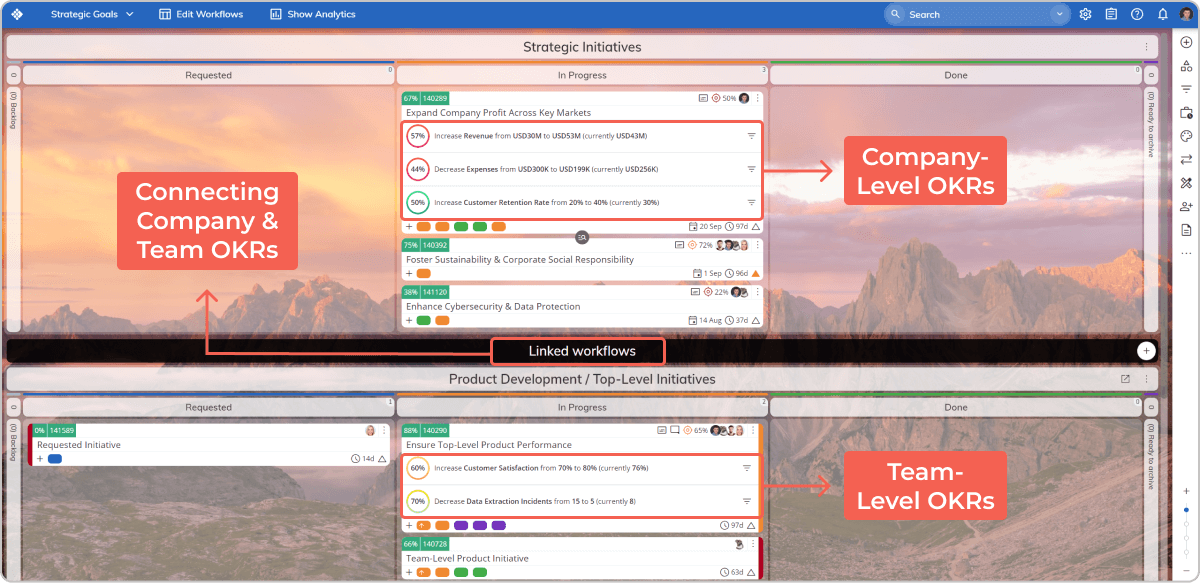 Visualizing company-level and team goals on a single OKR management board in Businessmap
Step 5: Create an Evolutionary Roadmap
Agile transformation is an ongoing journey, not a one-time project. It's essential to approach it with a roadmap that evolves as you learn and adapt. Once you have mapped your current processes, incrementally introduce Agile practices and refine them based on feedback.
Action Steps:
- Identify areas for improvement in your current processes.
- Introduce Agile practices incrementally to avoid overwhelming teams.
- Regularly review and adapt your approach based on feedback from teams and stakeholders.
Step 6: Monitor Progress and Continuously Improve
Agile transformation is all about continuous improvement. Regularly assess the effectiveness of Agile practices, collect data on key performance metrics, and make adjustments as needed.
Action Steps:
- Schedule regular review sessions to assess the effectiveness of Agile practices.
- Collect data on key performance metrics, such as cycle time and delivery speed.
- Use insights from retrospectives to fine-tune workflows and improve the process.
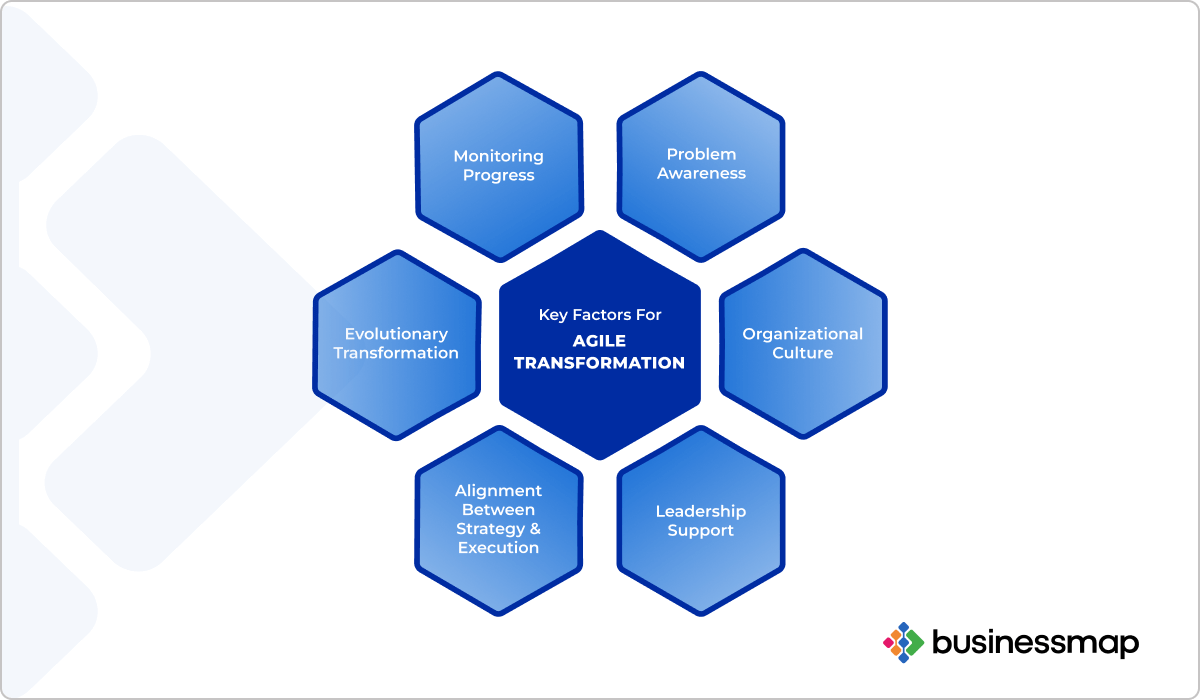 Agile transformation success factors
Plan fast. Adapt faster. Deliver confidently.
Why Agile Transformation Is More Than Just Adopting a Framework?
While adopting Agile practices is essential, it's important to understand that the transformation goes beyond just picking a framework or methodology. Whether it's Kanban, Scrum, or Scrumban, these frameworks are useful tools, but they don't capture the true essence of an Agile culture.
Failed Agile transformations often originate from cultural and leadership challenges rather than the technical aspects of how teams meet or how work items are estimated. The root issues are often people- and process-related, things that frameworks alone cannot solve.
To achieve a true Agile transformation, organizations need to address these internal issues first. Once the organizational culture and processes are aligned with Agile values, a suitable framework or combination of frameworks can then be implemented based on the team's needs, business goals, and project types.
How Long Does Agile Transformation Take?
The timeline for Agile transformation varies based on your organization's size and readiness. Here's a typical timeline:
- Initial Assessment and Planning (1–2 months): Understand where your organization currently stands, identify pain points, and set clear objectives.
- Pilot and Training (3–6 months): Start small by piloting Agile practices with one or two teams. Provide training and support to ensure adoption.
- Scale and Continuous Improvement (6–12 months): Expand Agile practices across teams, regularly review progress, and refine processes.
What Are the Best Tools for Agile Transformation?
One of the critical components of Agile transformation is using the right tools to facilitate collaboration, track progress, and optimize workflows. The best tools for Agile transformation should:
- Enable Real-Time Collaboration: Ensure that teams can collaborate seamlessly.
- Provide Transparency: Offer clear visibility into project status, bottlenecks, and dependencies.
- Scale Across Teams: Enable cross-functional alignment from development to marketing and operations.
Businessmap is a powerful tool that helps teams visualize workflows, track dependencies, and seamlessly integrate Agile practices across the organization. With its native AI capabilities, it not only provides actionable insights but also automates many manual tasks, enabling teams to work more efficiently and make data-driven decisions.
FAQs
What is Agile transformation, and why should organizations pursue it?
Agile transformation is the process of shifting from traditional management methods to Agile ways of working that emphasize flexibility, collaboration, and adaptability. Organizations pursue Agile transformation to enhance their ability to adapt to market changes, improve efficiency, and drive innovation.
How long does a typical Agile transformation take?
The timeline for Agile transformation can vary depending on the organization's size and readiness. On average, it takes about 6–12 months to implement Agile across teams fully, but it's an ongoing process of learning and improvement.
What does Agile transformation require from teams?
Teams must embrace change, collaborate actively, and take ownership of their processes. Agile requires a shift from fixed-scope planning to iterative and flexible work cycles, empowering teams to make decisions and continuously improve their workflows.
How do I align Agile transformation with business strategy?
Align Agile transformation with business strategy by ensuring transparency across all initiatives, communicating a common vision, and regularly assessing how work contributes to organizational goals. Tools like Businessmap help bridge the gap between strategy and execution.
What are the best tools for Agile transformation?
Tools like Businessmap are ideal for scaling Agile transformations. These tools help teams visualize workflows, track dependencies, and connect strategy with execution, facilitating transparency and collaboration across departments.
Plan fast. Adapt faster. Deliver confidently.