Wichtigste Erkenntnisse
Trello ist ein beliebtes Kanban-Tool zur Visualisierung von Aufgaben, doch viele Teams benötigen früher oder später fortgeschrittene Funktionen für das Workflow-Management. Die besten Trello-Alternativen bieten Funktionen wie Automatisierung, Workflow-Analytik, Abhängigkeiten und Portfolio-Transparenz. Tools wie Businessmap, ClickUp, Asana und Monday.com bieten tiefere Funktionalität für Teams, die komplexe Projekte managen, über Abteilungen hinweg skalieren oder die Prozesseffizienz verbessern möchten.
Unter ihnen hebt sich Businessmap als die beste Trello-Alternative für Organisationen hervor, die sich von einfachem Task-Tracking hin zu umfassendem Workflow-Management mit fortgeschrittenen Kanban-Praktiken entwickeln möchten.
Warum Teams beginnen, nach Trello-Alternativen zu suchen
Trello wurde weit verbreitet eingesetzt, weil es Projektmanagement einfach gemacht hat. Ein Board mit Listen und Karten ist leicht zu verstehen, selbst für Teams ohne formalen Prozess.
Für viele Organisationen ist Trello der erste Schritt hin zu visuellem Arbeitsmanagement.
Doch wenn Teams wachsen und Workflows komplexer werden, treten Einschränkungen auf. Manager beginnen Fragen zu stellen, die Trello nur schwer beantworten kann:
- Wo befinden sich die Engpässe in unserem Workflow?
- Wie lange dauert es tatsächlich, Arbeit abzuschließen?
- Wie automatisieren wir wiederkehrende Prozesse?
- Wie können wir mehrere Teams koordinieren, die an derselben Initiative arbeiten?
In dieser Phase beginnen Organisationen, nach Trello-Alternativen zu suchen, die mehr Transparenz, Automatisierung und Kontrolle über den Workflow bieten.
Schneller Funktionsvergleich von Trello-Alternativen
Warum Teams aus Trello herauswachsen
Trello eignet sich am besten für kleine Teams, die einfache Workflows verwalten. Doch sobald Projekte mehrere Stakeholder, Abhängigkeiten oder strategische Initiativen umfassen, kann seine Einfachheit zur Einschränkung werden.
Begrenzte Workflow-Analytik
Trello zeigt, welche Arbeit sich aktuell auf einem Board befindet, bietet jedoch nur begrenzte Einblicke darin, wie sich Arbeit im Laufe der Zeit durch einen Prozess bewegt.
Teams möchten häufig die Zykluszeit messen, Durchsatz analysieren oder Engpässe im Prozess identifizieren. Ohne diese Einblicke wird es schwierig, die Lieferleistung zu verbessern.
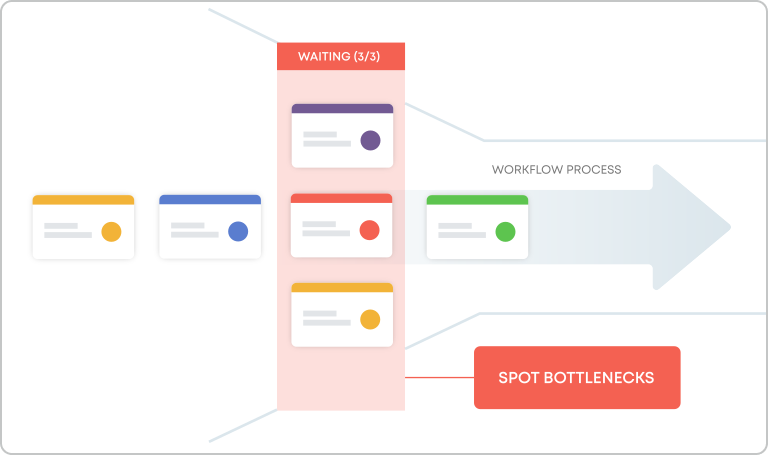 Identifikation von Prozessengpässen zur Verbesserung des Lieferflusses
Grundlegende Automatisierungsfunktionen
Trello bietet Automatisierung über Butler, doch komplexe Workflows erfordern schnell fortgeschrittenere Automatisierungsregeln. Organisationen benötigen häufig Automatisierung, um Statusänderungen auszulösen, Arbeit automatisch zuzuweisen, Richtlinien durchzusetzen oder Stakeholder zu benachrichtigen.
Fehlende Portfolio-Transparenz
Wenn Organisationen mehrere Teams verwalten, verteilt sich Arbeit häufig über viele Boards. Führungskräfte benötigen die Möglichkeit, Initiativen teamübergreifend zu verfolgen und zu verstehen, wie operative Arbeit zu strategischen Zielen beiträgt.
Begrenztes Abhängigkeitsmanagement
Viele Projekte erfordern klare Beziehungen zwischen Aufgaben. Ohne Visualisierung von Abhängigkeiten wird die Koordination zwischen Teams schwierig.
Die besten Trello-Alternativen im Jahr 2026
Fünf Projektmanagement-Plattformen bieten stärkere Workflow-Funktionen, während sie die visuelle Einfachheit bewahren, die Trello populär gemacht hat.
1. Businessmap - Beste Trello-Alternative für fortgeschrittenes Kanban und Enterprise-Workflow-Management
Businessmap wurde für Teams entwickelt, die über einfaches Task-Tracking hinausgehen und einen reiferen Ansatz für Workflow-Management verfolgen möchten.
Während Trello sich hauptsächlich auf Visualisierung konzentriert, unterstützt Businessmap fortgeschrittene Praktiken, darunter:
- Workflow-Automatisierung
- Sofortige KI-gestützte Dateneinblicke
- Abhängigkeitsmanagement
- Portfolio-Transparenz
- Value Stream Management
- Interaktive Whiteboards
- Dokumentenmanagement
Diese Funktionen ermöglichen es Organisationen nicht nur, Arbeit zu verfolgen, sondern auch zu optimieren, wie Arbeit durch ihre Systeme fließt.
Zum Beispiel können Teams arbeitsbezogene Metriken wie Zykluszeit und Durchsatz überwachen, um Engpässe zu identifizieren und die Liefergeschwindigkeit kontinuierlich zu verbessern.
Businessmap ermöglicht es Führungskräften außerdem, Boards auf Teamebene mit Portfolio-Initiativen zu verbinden und so eine klare Sicht darauf zu erhalten, wie operative Arbeit zu strategischen Ergebnissen beiträgt.
Umfassende Nachverfolgbarkeit vom Unternehmensportfolio bis zum Aufgabenmanagement in einer kontinuierlich aktualisierten Plattform. — Gartner Peer Insights Bewertung
2. ClickUp - Am besten für Aufgabenmanagement & Anpassbarkeit
ClickUp hat sich zu einer beliebten All-in-One-Produktivitätsplattform entwickelt.
Sie bietet Funktionen wie:
- Gantt-Diagramme
- Zeiterfassung
- Dashboards
- Mehrere Projektansichten
ClickUp eignet sich gut für Teams, die eine hochgradig anpassbare Plattform suchen, die Aufgabenmanagement, Dokumentation und Zusammenarbeit kombiniert.
3. Asana - Am besten für kreatives Arbeitsmanagement
Asana ist bekannt für seinen strukturierten Ansatz im Projektmanagement.
Es bietet starke Funktionen für:
- Abhängigkeitsmanagement
- Zeitachsenplanung
- Workflow-Automatisierung
Viele Organisationen setzen auf Asana, wenn sie klarere Planungsstrukturen und bereichsübergreifende Koordination benötigen.
Allerdings können größere Unternehmen die Portfolio-Funktionen im Vergleich zu Enterprise-Work-Management-Plattformen als eingeschränkt empfinden.
4. Monday.com - Am besten für tägliches Arbeitsmanagement mit KI
Monday.com positioniert sich als flexibles Work Operating System.
Zu seinen Stärken gehören:
- Anpassbare Workflows
- Dashboards und Reporting
- Automatisierungs-Templates
Es wird häufig in Abteilungen wie Marketing, Operations und Produktentwicklung eingesetzt.
5. Notion - Am besten für Wissensmanagement + leichtgewichtiges Task-Tracking
Notion kombiniert Dokumentation und Projektverfolgung in einem einzigen Workspace.
Es ist besonders bei kleineren Teams beliebt, die ein flexibles System suchen für:
- Wissensmanagement
- Leichtgewichtiges Task-Tracking
- Zusammenarbeit
Teams mit komplexeren Workflows benötigen jedoch häufig leistungsstärkere Projektmanagement-Funktionen.
Trello vs. Businessmap: Die wichtigsten Unterschiede erklärt
Trello und Businessmap nutzen beide die Kanban-Methode, um Arbeit zu visualisieren, sind jedoch für sehr unterschiedliche Reifegrade im Workflow-Management konzipiert.
Trello konzentriert sich hauptsächlich auf einfache Aufgabenvisualisierung, während Businessmap Funktionen für das Management und die Optimierung komplexer Workflows über Teams und Projekte hinweg bietet.
| FÄHIGKEIT | TRELLO | Businessmap |
|---|---|---|
| Workflow-Visualisierung | Grundlegende Boards | Anpassbare Boards mit mehreren Workflows, Swimlanes und Automatisierungen |
| Arbeitsabhängigkeiten | Begrenzt | Abhängigkeitskarten, Parent-Child- sowie Vorgänger-Nachfolger-Beziehungen |
| Workflow-Automatisierung | Integrierte Butler-Regeln zur Automatisierung | No-Code „If-This-Then-That“-Workflow-Automatisierung |
| KI-Automatisierung | Grundlegende KI für Kartenbeschreibungen | KI für Zusammenfassungen, Subtasks und prädiktive Insights |
| Analytik | Grundlegendes Reporting, erweitert über Plugins | Integrierte Performance-Analytik und Prognosen |
| Portfolio-Transparenz | Nein | Portfolio-Boards |
Wann Trello ausreicht
Trello eignet sich gut für kleine Teams, persönliches Task-Management und einfache Projektkoordination.
Wann Businessmap die bessere Wahl ist
Businessmap wird besonders wertvoll, wenn Teams mehr Workflow-Transparenz, Automatisierung und bereichsübergreifende Koordination benötigen.
Welche Tools bieten bessere Automatisierung und Workload-Ansichten als Trello?
Automatisierung und Workload-Transparenz sind zwei Bereiche, in denen moderne Projektmanagement-Tools Trello deutlich übertreffen.
Beispielsweise ermöglichen Tools wie Businessmap die Erstellung von Automatisierungsregeln, die Aktionen bei bestimmten Ereignissen auslösen.
Beispiele:
- Automatisches Verschieben von Aufgaben nach Abschluss
- Zuweisung von Verantwortlichen je nach Workflow-Stufe
- Benachrichtigung von Teams bei gelösten Abhängigkeiten
Zusätzlich bieten fortschrittliche Tools Workload-Ansichten, die Managern helfen, Kapazitäten zu verstehen und Arbeit besser zu verteilen.
Welche Tools skalieren für Enterprise-Anforderungen und behalten dennoch die visuelle Einfachheit von Trello bei?
Eine der größten Stärken von Trello ist seine visuelle Einfachheit. Doch um diese im Unternehmen zu skalieren, sind Portfolio-Dashboards, teamübergreifende Koordination, Workflow-Analytik und Automatisierung erforderlich.
Plattformen wie Businessmap sind darauf ausgelegt, die visuelle Klarheit von Kanban-Boards zu erhalten und gleichzeitig Enterprise-Workflow-Management zu unterstützen.
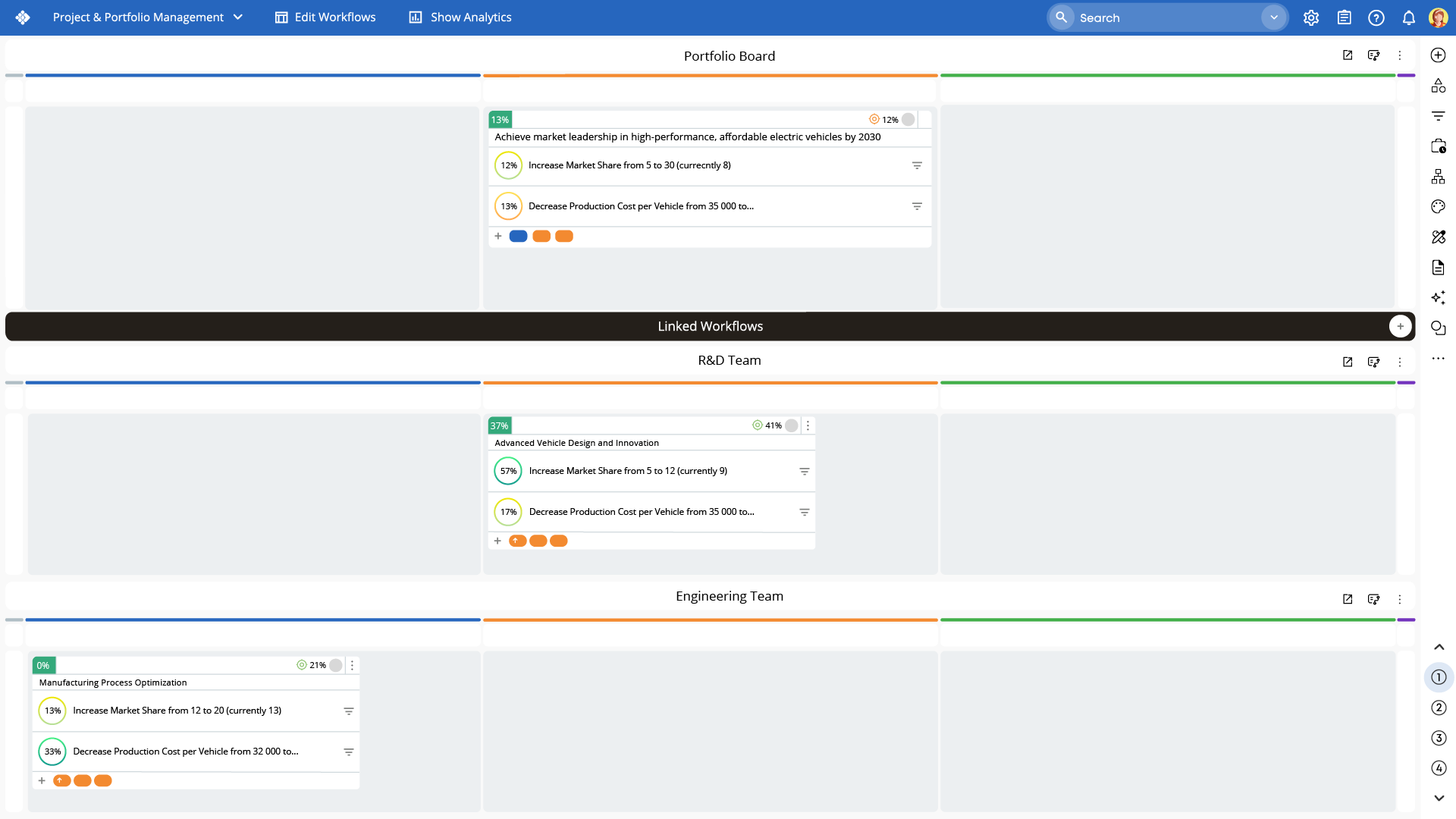 Ein Portfolio-Board, das die Verknüpfung von strategischen Zielen mit operativen Workflows ermöglicht
FAQs
Was ist die beste Trello-Alternative für fortgeschrittenes Workflow-Management?
Businessmap ist eine der besten Trello-Alternativen für fortgeschrittenes Workflow-Management und bietet anpassbare Workflows, Projektanalytik, Automatisierung, KI-gestützte Funktionen, Abhängigkeitsmanagement und Portfolio-Boards.
Gibt es kostenlose Trello-Alternativen?
Ja. Tools wie ClickUp und Notion bieten kostenlose Versionen an. Erweiterte Automatisierungs- und Analysefunktionen sind jedoch meist kostenpflichtig.
Kann ich meine Trello-Boards zu Businessmap migrieren?
Ja. Businessmap bietet eine Importfunktion für Trello, mit der Teams ihre Boards direkt übertragen können. Mehr erfahren↗
Welche Trello-Alternativen skalieren am besten für Unternehmen?
Plattformen wie Businessmap, Monday.com und ClickUp sind darauf ausgelegt, über mehrere Teams und Abteilungen hinweg zu skalieren und gleichzeitig Portfolio-Transparenz sowie Workflow-Automatisierung zu bieten.
Entdecken Sie, wie Businessmap Ihr Arbeitsmanagement-System transformieren kann.

Iva Krasteva
Content Creator Expert | Agile Practitioner | Kanban Certified
Mit einem Hintergrund in Geistigem Eigentum, SEO, Content-Erstellung und Schulungen in Lean, Agile und Kanban ist Iva eine begeisterte Agile-Praktikerin, die Zusammenarbeit und Flexibilität bei jedem Schritt begrüßt. Getrieben von kontinuierlichem Lernen und Wissensdurst, fasziniert von der Kreativität der Menschen.